
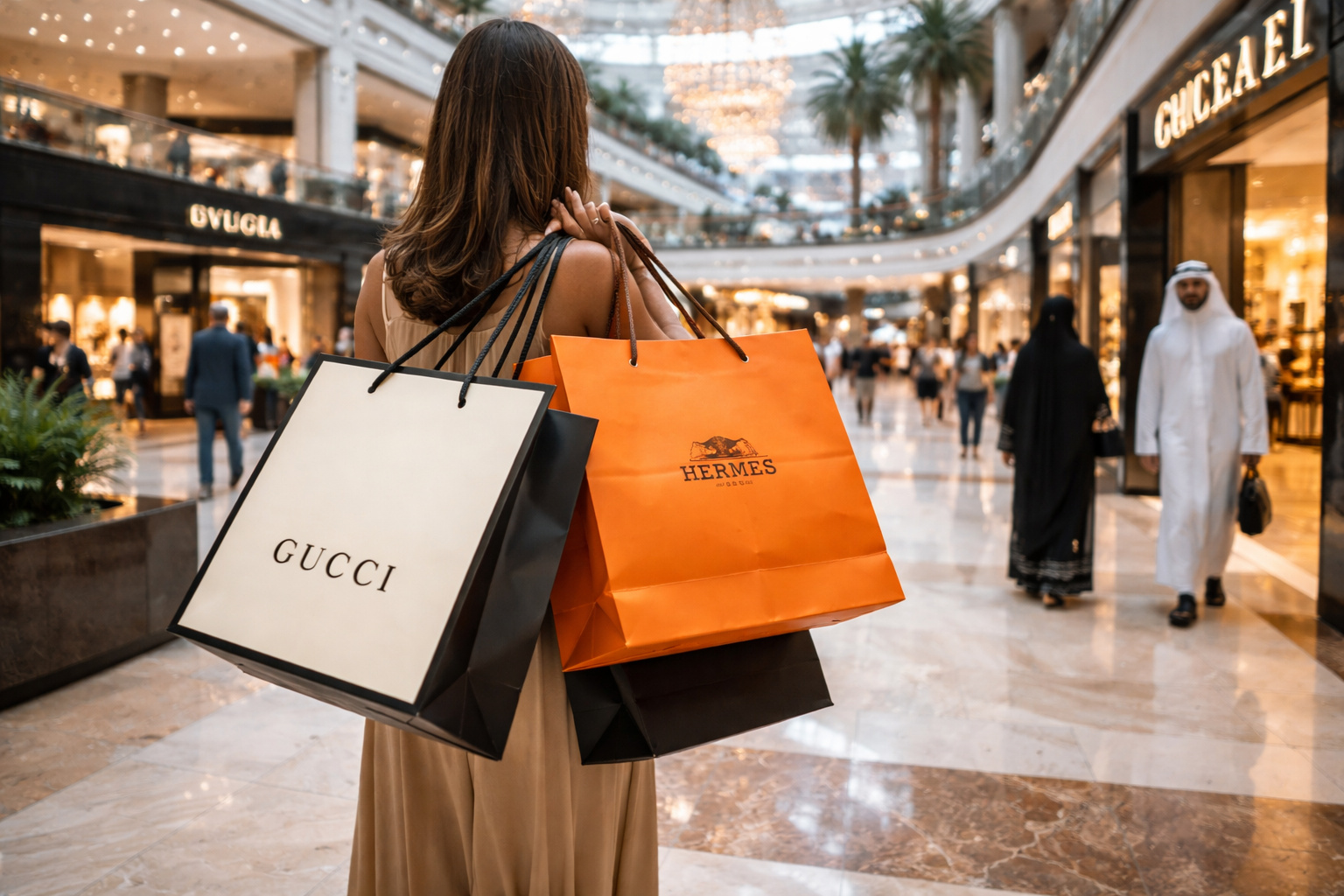
Luxury stocks fell sharply on Wednesday after disappointing first-quarter earnings from Kering and Hermès highlighted the growing toll of the Middle East conflict on high-end spending, tourism and investor confidence.

The selloff, which spread across Europe’s luxury sector, signals rising concerns that geopolitical tensions and macroeconomic uncertainty are derailing hopes of a recovery in the $400 billion industry.
Shares of Hermès plunged 14%, while Kering dropped 10%, dragging peers such as Burberry, Christian Dior, LVMH and Moncler lower by between 2% and 3% on the Stoxx 600.
Earlier this week, sector bellwether LVMH reported softer sales for the first quarter, citing disruptions to the geopolitical and economic landscape, particularly from the conflict in the Middle East.
The luxury sector, already grappling with trade tensions and a challenging economic backdrop, is now facing fresh pressure from the war in Iran, which analysts say could dampen regional demand and curb spending by Middle Eastern tourists in Europe.
Gucci’s weakness deepens pressure on Kering
At the centre of Kering’s disappointing performance was continued weakness at its flagship brand Gucci, where first-quarter sales fell 8% from a year earlier.
The company said the Iran war had weighed on spending by Middle Eastern consumers and curtailed international travel, both key drivers of luxury demand.
Retail revenues in the Middle East declined 11% during the quarter, despite solid growth in the first two months of the year before the conflict escalated on February 28.
Finance chief Armelle Poulou said the war shaved off 3% of overall group sales in March, or around 1% for the quarter as a whole, with a similar impact on Gucci.
Kering noted that the Middle East accounts for about 5% of its overall revenue and said it was closely monitoring developments.
“While some areas experienced temporary disruptions, the total retail network is operational today,” the company said, adding that “beyond the localized impact,” the broader concern relates to global tourism trends and the macroeconomic backdrop.
Despite the uncertain environment, Kering reiterated its aim of returning to growth and improving margins this year.
However, analysts remain cautious about the pace of recovery.
“While guidance was confirmed, the timeline for a Gucci turnaround remains uncertain and likely gradual, against a challenging macro backdrop and ongoing geopolitical tensions,” Citi analysts wrote, referring to ongoing structural challenges at the brand.
Gucci, once Kering’s main profit engine, has seen its quarterly sales roughly halve compared with 2023 levels, reflecting the fallout from aggressive price increases, changing aesthetics and management churn that have alienated parts of its customer base.
Hermès slowdown signals broader sector strain
Meanwhile, Hermès reported a slowdown in sales growth, suggesting that even the most resilient players in the sector are not immune to geopolitical shocks.
The company posted revenue of 4.07 billion euros ($4.80 billion) for the first quarter, representing a 5.6% increase at constant exchange rates.
However, the figure fell short of analysts’ expectations of 4.16 billion euros and marked a slowdown from the 9.8% growth recorded in the previous quarter.
At current exchange rates, sales declined 1% year-on-year, as currency fluctuations wiped out 290 million euros in revenue.
Growth in key product categories, including Birkin and Kelly bags, silk scarves and perfumes, came in at 6%, below the 7.1% expected by analysts.
The company attributed part of the weakness to declining tourist flows linked to the conflict.
Sales in the Middle East fell 6% to 160 million euros, while demand in key tourist destinations such as the UK, Italy and Switzerland also weakened.
“The Middle East, down by 6%, was of course significantly impacted by the geopolitical events affecting the region in March,” said chief financial officer Eric du Halgouet.
He added that sales in luxury malls in the United Arab Emirates dropped by 40% in March.
Middle East disruption hits tourism and spending
The Middle East has been one of the fastest-growing regions for luxury brands in recent years, accounting for roughly 5% of global consumption.
However, the conflict has disrupted travel patterns and consumer confidence, undermining a key pillar of demand.
“It was definitely a strategic region. Everything was okay,” said Carole Madjo, head of luxury research at Barclays told Reuters.
That picture has changed sharply in recent weeks.
Sales in major shopping destinations in Dubai and Abu Dhabi have declined significantly, with some brands reporting drops of 30% to 50% at the Mall of the Emirates in March, Reuters reported citing sources.
The impact extends beyond the region itself.
Middle Eastern tourists are among the highest spenders globally, and their reduced travel has hit luxury sales in Europe, particularly in cities and airport retail outlets that depend heavily on international visitors.
Dubai, a key hub for luxury retail and tourism, has also been directly affected by the conflict.
Infrastructure disruptions and security concerns have dented its image as a stable destination, with analysts warning that recovery could take months even if tensions ease.
Recovery hopes face renewed uncertainty
The latest earnings underscore the fragile state of the luxury sector, which has already been grappling with slowing demand, trade tensions, and economic uncertainty.
Since the end of the post-pandemic luxury boom in 2022, the combined market capitalisation of LVMH and Kering has fallen by more than 100 billion euros.
Industry-wide sales declined 2% last year, according to Bain & Company, and expectations for a rebound this year are now under pressure.
Analysts warn that the ripple effects of the war could extend beyond the Gulf region.
Bernstein said higher oil prices, rising travel costs, and potential financial market volatility could “easily disrupt” luxury demand globally, especially in the United States.
“If it now turns out that whatever luxury recovery we were hoping for in 2026 is not going to happen, and it’s going to be postponed at best into the second half or into next year, I don’t think anybody can be surprised by it,” said Christopher Rossbach, portfolio manager at J Stern & Co in London in the Reuters report.
While companies such as Hermès maintain confidence in their medium-term outlook, the near-term environment remains highly uncertain, with geopolitical risks, currency volatility, and shifting consumer behaviour continuing to weigh on the sector.
The post Kering, Hermes fall on weak earnings: how Iran war is hitting luxury sector appeared first on Invezz