
Global markets remained on edge as US President Donald Trump escalated threats against Iran ahead of a key Strait of Hormuz deadline, while Russia and China vetoed a UN resolution aimed at reopening the vital shipping route, oil prices surged on supply disruption fears, and Bitcoin held firm despite broader market uncertainty.

Trump’s Iran deadline looms closer
US President Donald Trump issued a stark warning to Iran, threatening severe military action if Tehran fails to comply with a deadline to reopen the Strait of Hormuz.
“The entire country can be taken out in one night – and that night might be tomorrow night,” Trump said, adding that Iran could be sent back to the “Stone Ages.”
“They’re going to have no bridges,” he said. “They’re going to have no power plants.”
The deadline for an “acceptable” deal—ensuring the free flow of energy through the Gulf—is set for 8 p.m. Washington time.
Despite the warnings, Iran has rejected proposals for a temporary ceasefire, calling instead for a permanent end to the conflict and the lifting of sanctions.
Markets reacted cautiously, with the S&P 500 falling 0.54% and the Dow Jones declining 263 points, reflecting uncertainty over whether the situation will escalate or de-escalate.
Russia, China veto UN resolution on Strait of Hormuz
Efforts to ease tensions through diplomatic channels faced a setback as Russia and China vetoed a United Nations Security Council resolution aimed at reopening the Strait of Hormuz.
The vote stood at 11 in favour, two against, and two abstentions. The resolution had been repeatedly diluted to secure broader support, removing earlier provisions that could have authorised the use of force.
The final version “strongly encourages states interested in the use of commercial maritime routes in the Strait of Hormuz to coordinate efforts, defensive in nature, commensurate with the circumstances, to contribute to ensuring the safety and security of navigation.”
It also called for escorting merchant vessels and deterring attempts to disrupt shipping, while demanding that Iran halt attacks on commercial vessels.
The Strait of Hormuz handles roughly one-fifth of global oil flows, and its closure has significantly disrupted energy markets and global supply chains.
Oil prices surge as supply risks intensify
Oil markets reflected the heightened geopolitical risk, with US crude poised for its highest closing price since 2022.
West Texas Intermediate (WTI) traded around $114.92 per barrel, up 2.3%, while Brent crude hovered near $110 per barrel. Earlier in the session, Brent traded above $111, with WTI approaching $116.
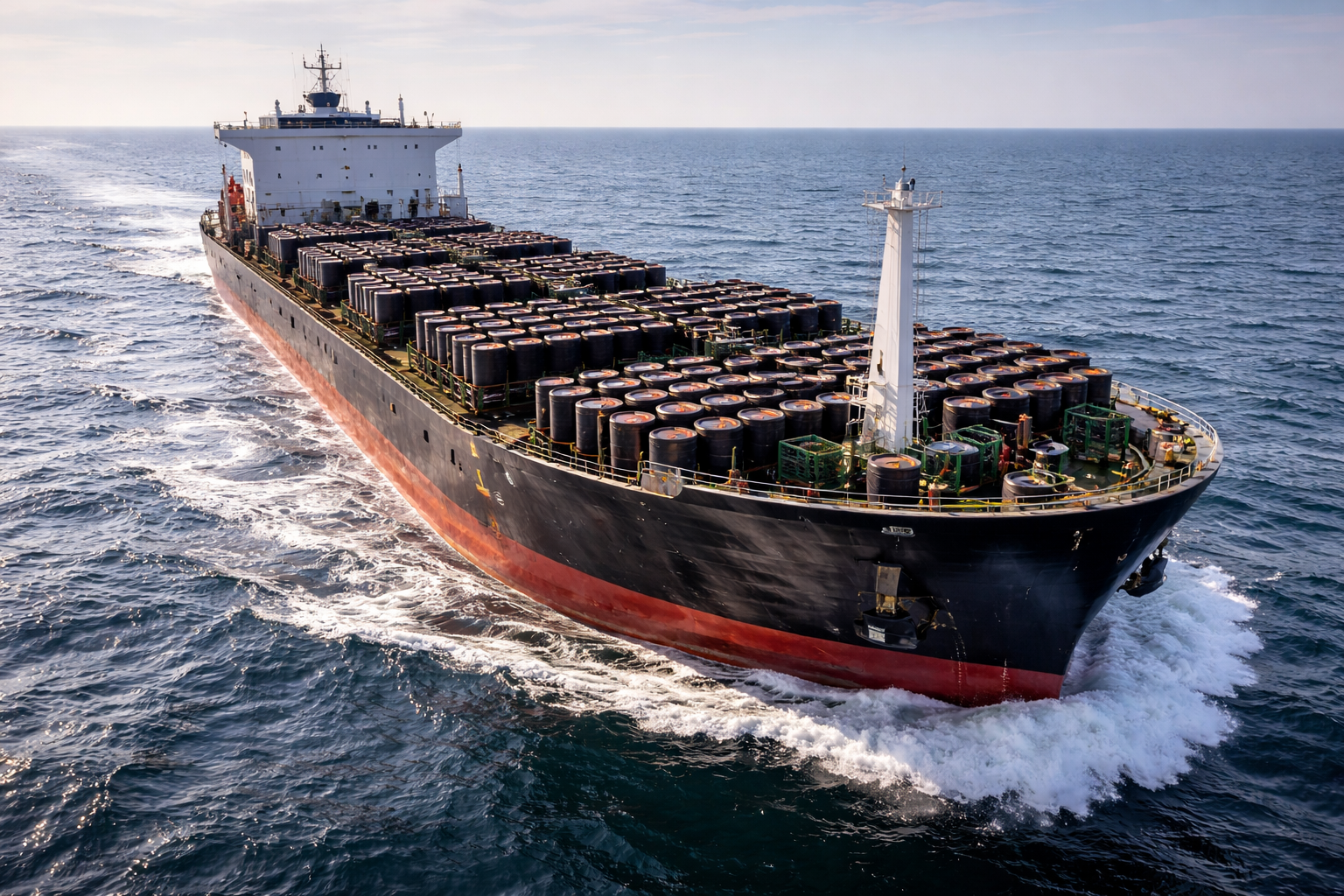
The prolonged closure of the Strait of Hormuz has disrupted shipping, creating tanker backlogs and limiting access to crude oil, liquefied natural gas, and key industrial inputs.
The crisis has driven shipping insurance costs higher and intensified concerns about global inflation and energy security, with the International Energy Agency describing the situation as the “greatest energy security crisis in history.”
Bitcoin holds firm despite market stress
Amid the broader volatility, Bitcoin has shown resilience, maintaining support around the $68,400 level despite negative sentiment.
Market maker Wintermute highlighted a divergence between price stability and investor sentiment, with the Fear and Greed Index remaining in “extreme fear” territory.
Institutional demand has underpinned Bitcoin’s performance. Spot exchange-traded funds absorbed around 50,000 BTC in March, while corporate buyers added 44,000 BTC.
However, ETF flows turned negative toward the end of March, with $414 million in outflows, while analysts noted that recent price gains may have been driven by leveraged trading.
Despite these shifts, Bitcoin has held above key levels, reflecting continued support from long-term investors even as geopolitical risks ripple across global markets.
The post Evening digest: Trump’s Iran deadline nears, oil surge shakes markets appeared first on Invezz