

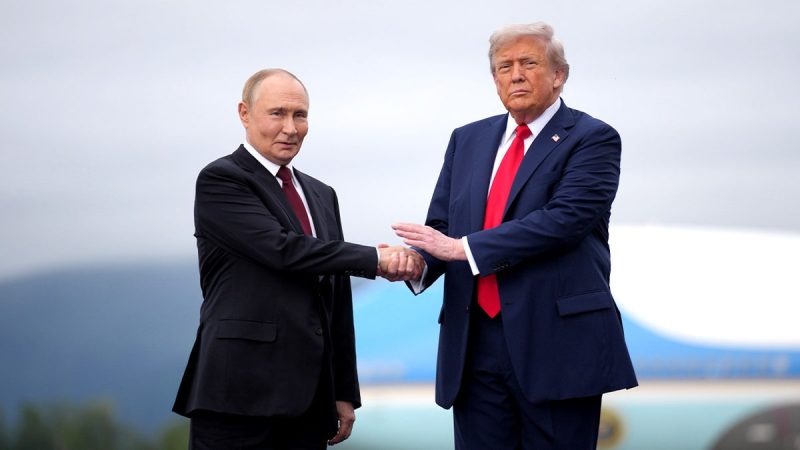
President Donald Trump vowed to impose ‘very severe consequences’ on Russia in 2025 if it didn’t commit to a deal to end its war on Ukraine.

As the war nears its four-year anniversary in late February, national security experts tell Fox News Digital that Russia is facing tangible consequences for the war. Those are through its network of proxy countries that have directly endured the might of the U.S. military and subsequently left Russia with fewer streams of revenue and resources, they say.
‘The President’s moves as it pertains to Russia are really strategic,’ Morgan Murphy, who previously served as the senior public diplomacy advisor to the president’s special envoy to Ukraine in 2025, told Fox News Digital. ‘So if you look at what he’s done with Iran and with Venezuela, these are two Russian proxies, right? Iran is a close ally of Russia.’
‘They sell a lot of drones to Russia,’ Murphy, who is running as a GOP Senate candidate to represent Alabama, continued. ‘Venezuela was again a proxy of Russia here in our hemisphere, and Trump is in the process of taking Iran off the table. He’s certainly taken Venezuela off the chessboard, and that that has to change Putin’s calculus, because he sees in President Trump a president who follows what he says he’s going to do.’
Russia’s war on Ukraine has persisted since Feb. 24, 2022, about a year after Trump’s first administration ended and during President Joe Biden’s presidency. Trump campaigned on ending the war upon his second inauguration in 2025, but ending the war has proven more difficult than anticipated as the U.S. continues negotiations.
A White House official who spoke to Fox Digital said Trump is driven by humanitarian concerns and wants the conflict ended to stop the needless loss of life. The official added that in recent months his team has made major headway toward a settlement, pointing to Trump’s own remarks that ‘very good things’ are developing between Ukraine and Russia.
According to the official, recent negotiations in Abu Dhabi, United Arab Emirates, were substantive and constructive, with U.S., Ukrainian and Russian delegations agreeing to a 314-person prisoner exchange — the first in five months. While more work is ahead, the official argued that breakthroughs like this show sustained diplomacy is producing real, measurable progress toward ending the war.
Trump launched a series of strikes on Iran in June 2025 that hobbled the country’s covert nuclear program. Massive protests swept Iran in December 2025 as citizens spoke out against the government and its cratering economy.
Iran violently cracked down on the nationwide protests, with thousands of citizens reportedly killed and the Trump administration warning Iran that it would face U.S. military action if the executions and killings continued.
The U.S. and Iran held discussions in Oman Friday as Tehran, Iran, continues to obscure its nuclear ambitions, with military intervention on the table as the U.S. seeks to prevent Iran from having nuclear weapons capabilities.
Iran and Russia have grown into a tighter wartime partnership in recent years, with U.S. and allied officials citing Iran’s supply of armed drones and other defense cooperation that has helped power Russia’s attacks in Ukraine — drawing the two heavily sanctioned regimes closer economically and militarily.
Ret. Air Force Gen. Bruce Carlson pointed to the Trump administration’s actions on Iran and Venezuela as evidence of how Trump is strategically pressuring Russia via its proxies to end the war in Ukraine.
‘In any campaign, you don’t just target command centers — you cut supply lines and logistics,’ Carlson said. ‘Pressuring Russian proxies does exactly that. Venezuela, Iran, and the shadow fleet are key arteries feeding Russia’s war in Ukraine. Additionally, by pressing Europe to increase NATO spending and move off Russian oil and gas, we are directly altering Moscow’s decision-making.’
Carlson argued that, strategically, the trend lines are moving against Moscow as the U.S. ramps up pressure on Russia’s partners — leaving Putin with fewer backers, tighter resources and less flexibility, and undermining any assumption that dragging out the war comes without a cost.
The retired Air Force general added that Putin and his proxies operate as a single ecosystem: Russia’s campaign relies on outside suppliers and sanctions-busting networks, so hitting any link in that chain can weaken Russia’s revenue and its ability to sustain attacks on Ukrainian civilians.
‘But ensuring a lasting and fair peace is not solely about pressuring Russia. As the cold winter continues in Ukraine, there are increasing concerns on Ukraine’s energy needs and air defense systems. U.S. and European support remain vital,’ he added.
As tensions with Iran heighten, the Trump administration successfully captured Venezuelan dictator Nicolás Maduro on sweeping narco-trafficking charges in January.
Venezuela is another Russian ally, publicly backing Moscow and maintaining high-level diplomatic ties, while giving Russia a Western Hemisphere foothold through military-technical cooperation and deep dependence on Russian arms — a relationship that has triggered U.S. sanctions actions tied to Venezuela’s oil sector and Russian-linked firms.
‘The removal of Maduro stripped Moscow of a key client in our hemisphere, and the increased pressure on Iran threatens the weapons and drone supply chain that Russia uses against Ukrainian civilians,’ Carrie Filipetti, executive director of foreign policy group the Vandenberg Coalition, told Fox News Digital. ‘This is how we have to change Putin’s long-term calculus.’
‘For the first time, the United States has used the power of American diplomacy to bring Ukraine and Russia into trilateral diplomatic talks,’ Filipetti added. ‘Combined with the threat of additional sanctions reliance and increased pressure on the countries that buy Russian energy, these steps are critical to shaking Russia’s assumption that time is on its side.’
Ret. Air Force Lt. Gen. Richard Newton told Fox News Digital that when Trump warned Russia of severe consequences in 2025 if Moscow did not end the war, the threat was followed by tangible consequences that reverberated through the Kremlin.
‘Deterrence and leverage requires our adversaries (to) believe we will act,’ Newton said. ‘President Trump is doing just that by disrupting the systems that fund and sustain Putin’s war. The capture of Maduro and the just announced trade deal with India’s Prime Minister Modi — that forces India off of Russian oil — is a major blow to Russia’s war machine.’
The White House said in February that it struck with India to increase U.S. energy imports and stop buying Russian oil. The U.S. tops the world in daily oil production, with Saudi Arabia and Russia following behind.
Filipetti argued that peace in Ukraine is only obtained by forcing Russia to face ‘real consequences.’
‘Vladimir Putin is responsible for a war of aggression marked by atrocities against Ukrainian civilians, and any lasting peace must impose real consequences on Russia itself. And weakening Russia’s proxies and isolating Putin is one of the most effective ways to reduce his ability to wage war,’ Filipetti said.
‘When it comes to China, North Korea, and Iran — without question these authoritarians are facing a very different calculus than just a few months ago,’ she said.
While Newton pointed to a shadow-fleet sanctions package and another sanctions package that are moving through Congress, along with higher NATO spending and a tougher allied military posture, as key pressure points he says could help drive a peace deal.
Republican South Carolina Sen. Lindsey Graham is promoting a sweeping Russia sanctions bill that would tighten the screws on Moscow by punishing countries and companies that keep buying Russian energy with secondary sanctions and tariffs, while a separate bipartisan ‘shadow fleet’ package would target the tankers, insurers and shell networks Russia uses to move oil and evade sanctions.
Murphy argued that Trump already has sketched what he sees as a realistic off-ramp for Moscow — one he says even some Democrats would recognize as the best deal Putin is likely to get — including restoring Russia’s seat at the top diplomatic table, reopening some Western commercial access, and acknowledging Russia’s current occupation of Ukrainian territory without formally recognizing sovereignty.
Murphy likened that offer to a ‘golden bridge’ for Putin to exit the war, but said the Kremlin has so far declined it, making the next move ultimately Russia’s choice — and raising the question of how many more casualties Moscow is willing to absorb with no clear endpoint in sight.
The war underscores a Russian worldview U.S. negotiators often misread through a Western lens, Murphy said, explaining Russia is shaped by catastrophic losses in World War I and World War II and a deep-seated suspicion that invasion is a recurring threat. He said that unpredictability is why the U.S. military has long used the ‘Crazy Ivan’ moniker for Russian behavior.
Trump is meanwhile putting himself in the Russians’ shoes, Murphy argued, and meeting the moment with a clearer-eyed read of Moscow’s mindset and history.
‘It is a decision that the Russians are going to have to make. How many more lives do they want to feed into this meat grinder? How many more deaths are they willing to endure?’ Murphy said.
Ukrainian President Volodymyr Zelenskyy told reporters in February that the U.S. set a June deadline for Moscow and Kyiv to strike an agreement to end the war, teeing up heightened tensions ahead of the U.S. midterms in November.