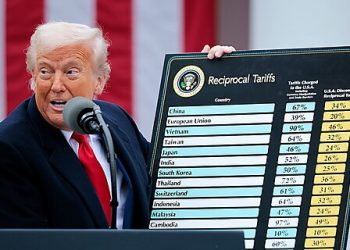

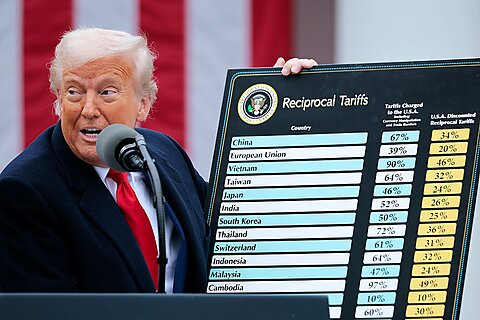

The Supreme Court has invalidated the massive tariffs that President Trump attempted to impose under the International Emergency Economic Powers Act. Unfortunately, that is not the end of the story. Now the president has sought to effect a similar usurpation of congressional tariff authority by using Section 122 of the Trade Act of 1974. Invoking this alternative legal justification, he has purported to impose 10 percent tariffs (likely to be increased to 15 percent) on imports from almost all US trading partners.
Soon after these tariffs were imposed, two small businesses filed a lawsuit in the Court of International Trade challenging their legality. The Cato Institute and Professor Ilya Somin, the B. Kenneth Simon Chair in Constitutional Studies at Cato, have now filed an amicus brief supporting that challenge (with thanks to Joshua Claybourn for his firm’s assistance in drafting and filing the brief).
In our brief, we explain why this sweeping imposition of tariffs is just as illegal as the previous one was, and for many of the same reasons.
First, our brief explains why Section 122 simply cannot be used in current circumstances. The statute only permits tariffs for up to 150 days in response to “fundamental international payments problems” that cause “large and serious United States balance-of-payments deficits” or “an imminent and significant depreciation of the dollar” or that create a need to cooperate with other countries in addressing an “international balance-of-payments disequilibrium.” These conditions simply cannot exist in a flexible exchange rate regime of the sort in place today.
Next, our brief explains why, if there is any ambiguity about whether Section 122 authorizes the massive tariffs imposed by the administration, the major questions doctrine requires this issue to be resolved against the government. The major questions doctrine requires Congress to “speak clearly” when it assigns to the executive “decisions of vast economic and political significance.” The impact of the massive new Section 122 tariffs is as large or larger than many previous policies invalidated by the Supreme Court on major questions doctrine grounds. And the tariff power is not exempt from major questions scrutiny on the supposed ground that it is a “foreign affairs” power. The major questions doctrine also counts against giving the administration a blank check in determining whether the preconditions to invoke Section 122 exist.
The Court of International Trade should rule against the Trump administration and declare the new round of tariffs to be illegal, because the circumstances that would trigger Section 122 do not (and cannot currently) exist.