
The closure of the Strait of Hormuz has answered a question the energy world had been debating for a decade. What does it actually cost to stay dependent on fossil fuels?

With Brent crude near $120 a barrel, gas above $4 a gallon across every US state, diesel up 45%, and the IEA describing the situation as the greatest global energy security challenge in history, the answer looks painful.
This is the backdrop against which the EV transition must now be honestly assessed.
Not through the lens of climate idealism or political tribalism, but through hard economics, geopolitical reality, and clear-eyed thinking about where the world is actually headed.
The numbers make the case
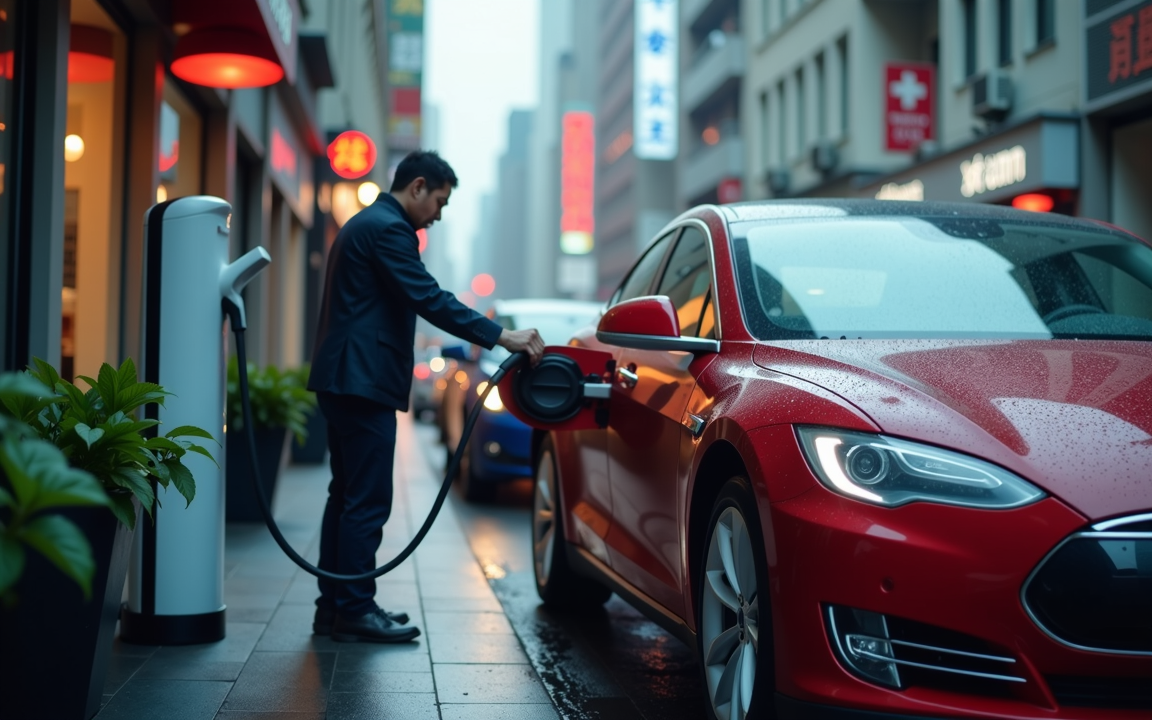
Before the war, the cost comparison between EVs and petrol vehicles was already compelling for anyone thinking beyond the showroom.
At 5 cents per mile versus 12 cents for a combustion engine, an EV cuts fuel costs by more than half. A full charge averaged $12.86 compared to $43 to fill a standard tank. Heavy commuters were breaking even within two years and saving thousands annually from year three onward.
Now apply post-war fuel prices.
That 7-cent-per-mile advantage has widened to roughly 11 or 12 cents. The financial case for an EV has not just strengthened. It has become difficult to argue against on pure economics alone.
Why is the surge in interest real but complicated?
EV search traffic jumped 20% in the first week after the Iran strikes.
Searches for the Tesla Model Y and Chevy Equinox nearly doubled.
Dealerships across the US, UK, and Southeast Asia reported a surge in inquiries. BYD showrooms across Asia saw buyers walking in who had never considered an EV before.
These signals are genuine. But they require careful reading.
The critical variable is duration rather than magnitude.
A single spike triggers curiosity, but three or more months of sustained high prices trigger decisions.
People who were not in the market for a new vehicle begin to enter it. Automakers quietly extend the sunset dates on EV models they planned to discontinue.
The industry math changes.
That sustained pressure now looks increasingly likely.
The paradox nobody is talking about
Here is the tension at the heart of this moment. The same war that makes EVs more desirable is making them harder to buy.
Mortgage rates climbed to 6.38% in late March. Inflation is running above 5% in several major economies.
The $11,000 average upfront premium on an EV is now being financed at rates that meaningfully extend the break-even timeline.
The middle-income commuter spending $50 a day on fuel is precisely the person who most needs an alternative, and precisely the person least able to absorb the capital cost of switching.
Compounding this, the Hormuz closure disrupted global sulfur supply, which feeds directly into battery material processing and mining costs.
The war that strengthened the demand case for EVs simultaneously pressured the supply chain that produces them.
The geographic divide is widening
China enters this moment having already passed the tipping point domestically.
BYD is producing vehicles at cost structures Western manufacturers cannot approach, and the state is accelerating EV and renewable infrastructure at a pace that looks less like industrial policy and more like strategic preparation.
Europe is experiencing its second major energy shock in four years, with gas storage already at historic lows entering the crisis.
The political consensus around energy transition has hardened from preference into something closer to an emergency posture.
What is expected now is accelerated offshore wind, grid investment, and EV infrastructure spending with a durability that climate-framed policy never quite achieved.
The United States is in the most contradictory position of all. It is the world’s largest oil producer, yet retail gas prices are still set by global markets.
Its domestic automakers have written down nearly $25 billion in EV-related losses and are scaling back production pipelines at precisely the moment global demand is turning.
Tariffs have made the world’s most affordable EVs, primarily from China, effectively inaccessible to American consumers.
The result is a population bearing the full pain of oil price volatility with diminishing access to the primary hedge against it.
What realistically comes next?
In the near term, EV adoption accelerates most sharply where the conditions already exist.
That is in upper-income households, dual-car families choosing to electrify one vehicle, fleet operators who can model long-term fuel cost exposure at the board level, and markets with developed charging infrastructure.
The used EV market is quietly becoming one of the most compelling value propositions in consumer transport. Lower entry price, dramatically lower running costs, and a depreciation curve that existing owners have already absorbed.
Over the medium term, battery costs continue their structural decline regardless of this conflict.
Purchase price parity between EVs and combustion vehicles is on track for most segments by 2028 to 2030. When that threshold arrives, the upfront cost barrier largely dissolves.
The argument shifts from “can I afford an EV” to “why would I buy anything else.”
The deeper structural reality is this: modern drone warfare has made maritime chokepoints permanently more vulnerable than they were in the era of conventional naval dominance. The Hormuz closure of 2026 will not be the last. Each disruption converts more permanent EV adopters and accelerates sovereign energy security planning in ways that outlast the immediate crisis.
The honest conclusion
The Iran war did not create the EV transition. It removed the remaining ambiguity about its direction.
The economics were already moving toward electrification. The security argument has now made the case in a language every government and household understands, regardless of political affiliation.
A gallon of gas above $4 is not a climate statistic. It is a daily, personal, inescapable cost that makes abstraction impossible.
The transition ahead is not clean. It is uneven, affordability-constrained, and politically contested in ways that will slow the curve in certain markets, particularly the US, while accelerating it sharply elsewhere. But the destination is no longer seriously in question.
The Strait of Hormuz is 33 kilometres wide.
For decades, that narrow waterway held the global economy hostage to geology and geopolitics.
The countries, industries, and households that move fastest to eliminate that dependency are not just saving money on fuel. They are buying themselves out of a vulnerability that, as 2026 has made clear, will keep extracting its price.
The post Hormuz closure, expensive fuel have made EVs impossible to ignore appeared first on Invezz