
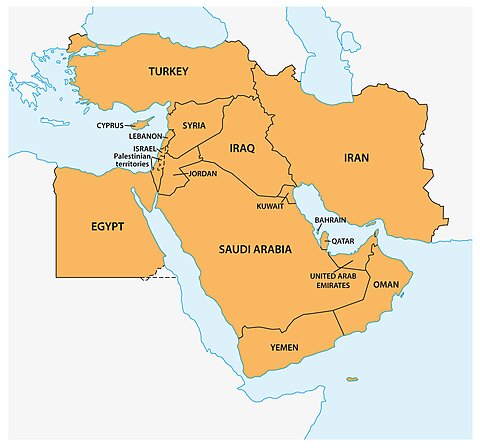

The Trump administration has led the United States into war with Iran, assuming it could secure a quick victory with limited costs. They were wrong. After more than two weeks of consistent bombing, new US intelligence suggests Iran’s regime is now consolidating power, unlikely to collapse, and led by a cadre more extreme than before. Despite this, Washington is deploying thousands of additional troops to the Middle East, and Trump inches closer to a potential ground campaign inside Iran. It is time to face reality: tactical successes cannot mask what has quickly become another strategic failure in the Middle East.
There was no question whether the United States and Israel could inflict major damage on the Iranian regime and its military. It took them only 100 hours to drop more bombs than in the first six months of the US-led counter-ISIS campaign and less than 24 hours to assassinate Ayatollah Ali Khamenei. The war has certainly achieved discrete tactical successes aimed at weakening Tehran. Yet the central question has always been the strategic end such force is meant to achieve.
Here, the administration’s strategy is divorced from its ostensible aims. Among the many contradicting rationales floated by Washington to justify the attack, two have been most prominent: eliminating Iran’s nuclear program and effecting regime change in Tehran. Washington has achieved neither of these objectives, nor is it in a position to do so.
The Trump administration first claimed Iran’s nuclear program represented an imminent threat, necessitating military action. Trump insisted that Tehran was only two weeks away from a bomb just months after claiming to have “completely and totally” obliterated the program during Operation Midnight Hammer.
There is no credible evidence that Iran was close to developing a nuclear weapon. Rafael Grossi, chief of the International Atomic Energy Agency (IAEA), confirmed as much after the war began. In fact, the opposite appears to be true. According to Omani Foreign Minister and chief negotiator between the United States and Iran, Badr bin Hamad al-Busaidi, Iran offered Washington notable concessions, some of which went beyond the guarantees stipulated in the 2015 Joint Comprehensive Plan of Action (JCPOA), which Trump scrapped in 2018.
There is now considerable evidence that Trump’s chief negotiators on the Iranian nuclear file—Jared Kushner and Steve Witkoff—fundamentally misunderstood at least some of the technical issues at the heart of the dispute, undermining their ability to conduct informed negotiations. Assuming the administration was negotiating in good faith, it lacked the skills to do so effectively.
Airpower alone will not destroy Iran’s nuclear program—it is too widely dispersed and deep underground. Critically, Iran still possesses nearly 1,000 pounds of Highly Enriched Uranium (HEU) enriched to 60 percent purity, close to the 90 percent required for a weapon. US intelligence suggests that Iran is capable of reaching some of the HEU buried underneath the facilities bombed last June. Trump is now reportedly weighing sending US special forces to seize Iran’s stockpile of HEU, but this carries tremendous risks: it is virtually impossible to know where all the HEU is, and even if Washington did, successfully extracting it from deep underground while under fire would require a massive ground force.
When the war ends, Iran will retain the technological expertise and likely the materials necessary to sustain its nuclear program. War has made future negotiations far more difficult, if not impossible. Tehran may now see nuclear weapons as essential—an outcome Trump has perversely incentivized.
The other rationale was regime change—a narrative Trump embraced when announcing the war, urging the Iranian people to revolt. Yet even after the killing of Ayatollah Ali Khamenei, US intelligence suggests that the regime is not at risk of collapse, and a large-scale war would likely not change that.
Elite cohesion remains intact, the security apparatus—particularly the Islamic Revolutionary Guards Corps (IRGC)—remains loyal to the regime, and the Iranian opposition is divided.
Khamenei’s replacement, his son Mojtaba Khamenei, just witnessed the purge of many in his family at the hands of the United States and Israel. He is a hardliner deeply connected to the IRGC, which has increasingly seized control of decision-making in Tehran. Even if Mojtaba is killed, the IRGC still represents the most powerful political, economic, and military actor inside Iran, and the wars with the United States and Israel have empowered a new, more hawkish generation within its ranks.
For them, this fight is existential. Trump not only failed to remove the regime, but he has likely made it more extreme.
The Trump administration has failed to accomplish the two principal aims of this war. Iran’s nuclear program is not destroyed, and the regime remains intact. Instead, the president has placed the United States on the path to another forever war in the Middle East. Tehran is prepared for a prolonged war of attrition and intends to raise the political, economic, and human costs until they become untenable for the United States. In particular, the Trump administration greatly underestimated Iran’s ability to disrupt the global energy market so quickly, and these disruptions are likely to impact the market even after the war ends. Further escalation by Trump will only exacerbate the problem and further entangle the United States. Washington is charging ahead without a strategy and risking costs it cannot afford.
The uncomfortable truth is that no one, including the Trump administration, knows where this war will lead. Washington has proved incapable or unwilling to learn from its past mistakes in the Middle East. Trump should cut his losses and get out while he still can.