
Saudi Arabia’s Aramco, the world’s largest oil exporter, announced its first-ever share buyback plan of up to $3 billion, even as the company reported a 12% drop in annual profit in 2025, primarily attributed to lower crude prices.

The company previously rewarded shareholders primarily through substantial dividend payouts.
However, a buyback program is now slated to be conducted over the next 18 months, according to an official press release.
The company posted a net income of $93.4 billion for 2025 compared to $106.2 billion in the previous year.
Earnings results and dividends
Net profit for the fourth quarter fell 20.5% to almost $17.8 billion due to increased operating costs.
This marks the 12th consecutive quarter of a year-on-year profit decline.
Aramco approved a base dividend payment of $21.89 billion for the fourth quarter, a 3.5% year-on-year increase.
It also paid $219 million in performance-linked dividends.
As a vital source of income for the Saudi state, the company remains one of the world’s largest dividend payers.
Despite a drop in crude prices in 2025, the company prioritised payouts, with total shareholder distributions for the year reaching $85.5 billion.
This mechanism for performance-linked dividends was introduced after the significant profits in 2022, following the Ukraine war, and is calculated based on free cash flow.
“This enabled a 3.5% increase to our base dividend, reinforcing our focus on delivering sustainable and progressive shareholder returns,” Aramco President and Chief Executive Officer Amin H. Nasser said.
Meanwhile, despite a year marked by oil-price volatility, the Saudi state oil giant announced a full-year adjusted net income of $104.7 billion, characterising the result as “robust growth.”
Aramco’s performance in 2025 reflected a decline, largely driven by weaker prices for crude oil, refined products, and chemicals.
Total revenue fell 7.2% to $415.8 billion. Consequently, the total dividends paid for the year were $85.5 billion, a decrease from $124 billion in 2024.
Despite the drop in revenue, the company’s gearing ratio, a measure of indebtedness, improved, falling to 3.8% at the end of 2025 from 4.5% at the end of 2024.
As a significant contributor to the Saudi economy, Aramco remains a crucial source of government revenue, providing over half of the state’s income, which is heavily reliant on fossil fuels.
The Saudi state maintains substantial ownership, directly holding nearly 81.5% of the company, with its sovereign investor, the Public Investment Fund, holding an additional 16%.
Aramco’s balance sheet
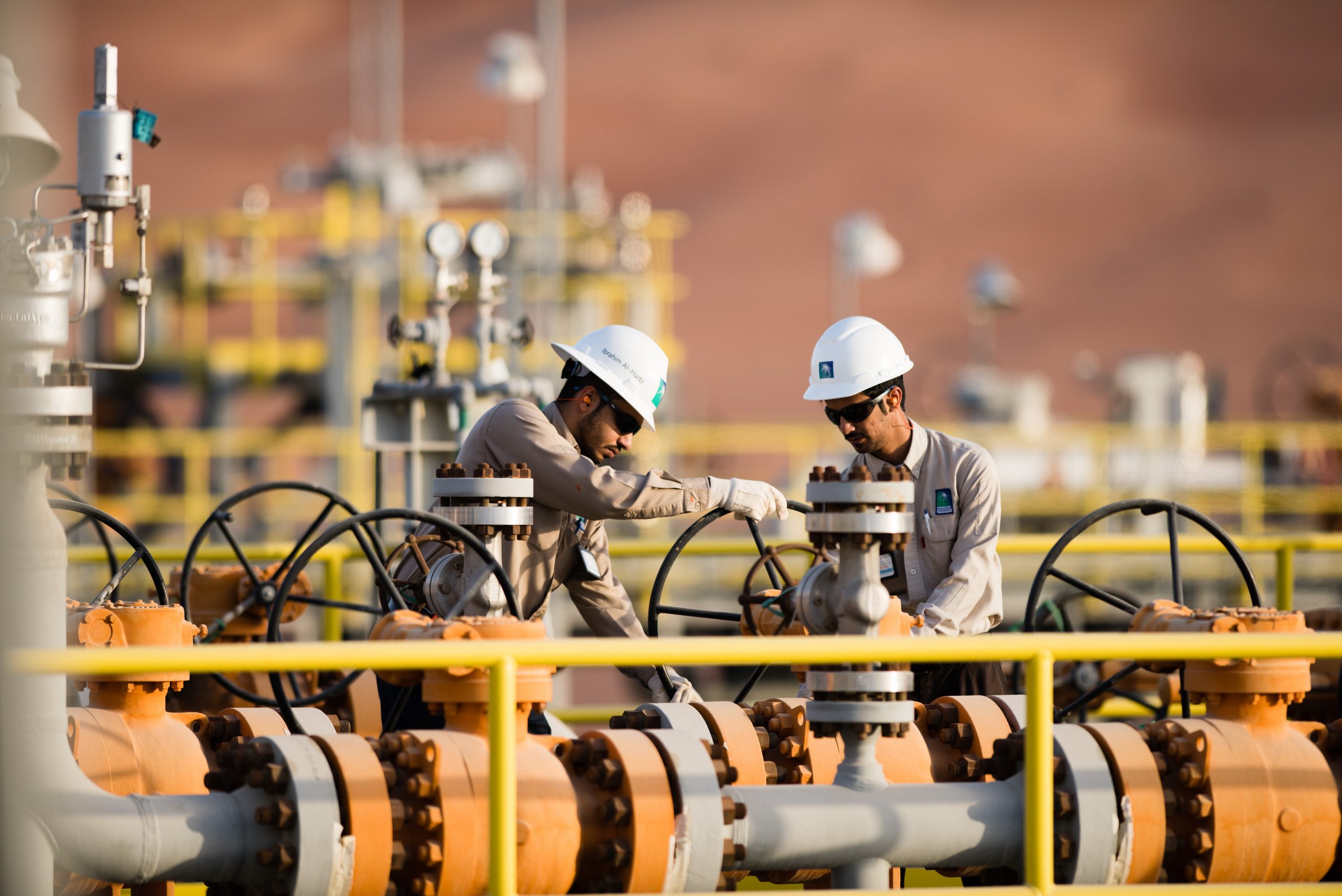
Aramco’s operating cash flow reached $136.2 billion last year, a result the company attributed to consistent production and robust performance in its downstream business.
The total capital investments for the year amounted to $52.2 billion. This figure aligned with the company’s guidance and represented a slight decrease compared to 2024 investment levels.
“Our disciplined capital allocation, combined with lower‑cost and highly reliable operations, drove strong financial performance in a year marked by price volatility,” Nasser said in the earnings release.
Global crude oil prices softened in 2025, dropping to $69.2 per barrel from $80.2 in 2024, a change driven by an increase in global supply.
Source: Saudi Aramco
However, recent escalations in the Middle East conflict have caused a sharp spike, pushing crude prices to nearly $120 per barrel.
Catastrophic consequence for oil markets
The CEO of Saudi oil giant Aramco, Amin Nasser, has warned that the Iran war poses a risk of “catastrophic consequences” for the global oil market.
Speaking on an earnings call on Tuesday, Nasser stated that the conflict has triggered “a severe chain reaction” and “a drastic domino effect.”
He emphasised that the impact extends beyond shipping, affecting sectors such as aviation, agriculture, and the automotive industry.
“There will be catastrophic consequences for the world’s oil market. The longer the disruption goes on and the more drastic the consequences for the global economy,” he said.
He added that it is one of the biggest threats so far for the oil and gas industry.
Last week, Aramco’s Ras Tanura refinery was struck by a projectile.
This incident occurred amidst widespread drone and missile attacks launched by Iran against Gulf states, which Iran claimed were in response to US and Israeli strikes against it.
Supply fears initially caused oil prices to surge.
However, prices dropped after US President Donald Trump warned that the US would retaliate “twenty times harder” should Iran attempt to stop the flow of oil through the Strait of Hormuz.
Also, bringing relief to the oil market was Trump’s comments that the war would be over soon.
At the time of writing, the price of West Texas Intermediate crude was at $87.56 per barrel, down 7.6%, while Brent was 7.7% lower at $91.38 a barrel.
The post Saudi Aramco’s profit falls 12% in 2025, announces $3B buyback appeared first on Invezz